
Behavioral Activation
“Acting your way into feeling differently.”

There is a skill in Cognitive Behavioral Therapy called “Behavioral Activation”. It has been found to be so effective that it has become in and of itself a short-term treatment, Behavioral Activation Therapy.
You don’t need a diagnosis to benefit from this principle.
Traditional Cognitive Behavioral Therapy (CBT) seeks to change unhelpful thought patterns and help us understand how our thoughts, feelings, and behaviors are all connected and influence one another. When our thought patterns change, so do our behaviors and how we feel about ourselves, and vice versa. Here is the traditional CBT triangle, for my visual readers:
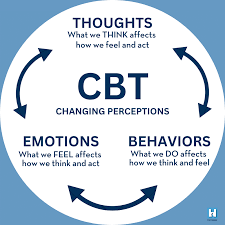
Behavioral activation is a component of CBT which targets more specifically our behaviors as the primary method of change. Behavioral activation says, essentially: no need to change your thoughts yet (that’s hard!) or feel motivated to change your behavior. In fact, motivation is not considered to be a prerequisite for change at all: you’re just going to do things differently without needing to think any differently. As the psychiatrist Harry Stack Sullivan put it, “It is easier to act yourself into a new way of feeling than to feel yourself into a new way of acting.”
Behavioral activation is described thusly as: “Acting your way into feeling differently.”1
There are certainly techniques included in this form of therapy that will not be included here, as this newsletter is not therapy. But this newsletter is a place where we love to discuss self-development and modalities of change, and we can learn from such therapeutic principles.
Too often, we wait to feel until we want to change before actually taking steps toward changing. We wait to feel worthy enough or “ready” enough to do the thing, and we wind up waiting forever.
When you’re not feeling particularly good—or you are clinically depressed or anxious—even doing things we usually enjoy feels like a chore. When we don’t possess the internal motivation to do all those things we want to want to do, it is easier to talk ourselves out of doing them at all.
Instead, behavioral activation says to do those things you want to want to do anyways. Instead of wanting to be a person who does X, just start doing X and watch your motivation catch up with your mind. Use the tiny habits principles we’ve all learned from James Clear or BJ Fogg: start small, atomically small, if you will. Make the new behavior as short and accessible as possible, and actually do it.
What makes behavioral activation effective is its downstream effects: when you start doing things differently—things that are rewarding and which contribute to the betterment of your life and self—you will eventually start thinking and feeling differently. Slowly, over time, you will develop the motivation and self-concept that aligns with the habits and behaviors you’ve already begun to incorporate in your life when you were still feeling shitty or dull.
Whether you’re feeling really bad, or your life has become a little monotonous, introducing a subtle change has the power to change everything. We all know the things that would make us feel better and different.
So go ahead, do something different today.
You don’t have to want to, you just have to do it.
Maggie
Commonly attributed to psychiatrist Harry Stack Sullivan